EYDER PERALTA, HOST:
President Trump is struggling to end the Iran war on his terms, but today marks the anniversary of what was a key moment in another American war. Five years ago, the Taliban retook Afghanistan's capital.
(SOUNDBITE OF MONTAGE)
UNIDENTIFIED REPORTER #1: President Ashraf Ghani held emergency talks with senior U.S. and NATO officials shortly after the Taliban amassed on the outskirts of Kabul.
UNIDENTIFIED REPORTER #2: The Taliban have moved into Kabul and are now patrolling the streets. Most U.S...
UNIDENTIFIED REPORTER #3: Meanwhile, Taliban fighters were posing for pictures in the presidential palace in Kabul after Afghanistan's president fled the country.
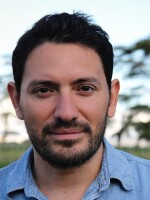
PERALTA: Matin Bek was in Kabul that day as the chief of staff to the Afghan president. He joins us now from Maryland. Matin, thank you for being here.
MATIN BEK: Thank you for having me.
PERALTA: What do you remember from that day?
BEK: Well, that day, I started my day very normal. I had breakfast at my home, and then I joined later in the meeting at the palace. No one was expecting there's a storm coming. We worked hard to put something in place. There were negotiations behind the scene going on with the Taliban. Then we had reached an understanding with the Taliban they would not enter Kabul for 15 days. So I tweeted that day saying, Kabul is safe. Don't be panic. Then we brought the president to speak to the nation. He authorized the nation to be secure. Nothing will be wrong. Taliban will not enter the city.
But unfortunately, after that interview - usually president, during lunchtime, he would go to his residence. He went to his residence, but then after knowing everything is safe, he fled the country, and things went out of control. And after three or four hours, Taliban entered Kabul and took the palace.
PERALTA: President Biden orders a chaotic withdrawal of U.S. forces, and he said he was ending a 20-year conflict that was no longer in America's national interest. Do you think he was correct?
BEK: No. No. I absolutely disagree with him. The whole investment, the 20 years of work of United States, the American taxpayers' money, the American blood, the Afghan's blood, everything was wasted, and the United States had done a lot in Afghanistan. I think it lost its credibility in the region and international, and also it lost its credibility among its partners. And the war has not ended. Probably have heard, a couple of weeks ago, a district fall in the northeast of Afghanistan. People are revolting. The Taliban have not been able, yet, to bring a constitutional order, and they have institutionalized gender apartheid. So basically, the country has turned to a prison.
PERALTA: What does ordinary life look like?
BEK: It's been five years. There's no constitution. There is no elected government. People have no political right. The womens (ph) are being - taking away all their political, civil rights. Can you believe in the 21st century, womens are not allowed to go to the public park? They are not allowed to work. Girls are not allowed to go to school. And on a daily basis, there's a massive number of people trying to escape the country, and they're dying in the borders of either Iran and Pakistan. The former Afghanistan National Security Forces - around 300,000 soldiers - they're being targeted on a daily basis and all around the country. So I don't see prospect for the future, unfortunately, and I'm scared. I'm afraid Afghanistan will turn to another Sudan.
PERALTA: Matin, you were among the many Afghans that fled the country. But last year, President Trump removed protections for thousands of Afghans who had come to the U.S. Some of them fought alongside American forces, and they are now facing deportation. How is that viewed among Afghans here?
BEK: Well, that's painful. I keep seeing the cases, and I have been always requested to write letter for them and provide either witness or talk with the lawyers. They were their partner. They worked along the United States against the terrorists, but they don't deserve to be treated like a criminal. I would request the administration to deal with these people, especially with the former member of Afghan Security Forces, with dignity and respect. They deserve that.
PERALTA: That's Matin Bek, a former Afghan official and now a fellow with New America's Future Security program. Matin, thank you for joining us.
BEK: Thanks for having me.
(SOUNDBITE OF JACAL'S "ESCAPE") Transcript provided by NPR, Copyright NPR.
NPR transcripts are created on a rush deadline by an NPR contractor. This text may not be in its final form and may be updated or revised in the future. Accuracy and availability may vary. The authoritative record of NPR’s programming is the audio record.